Our animals
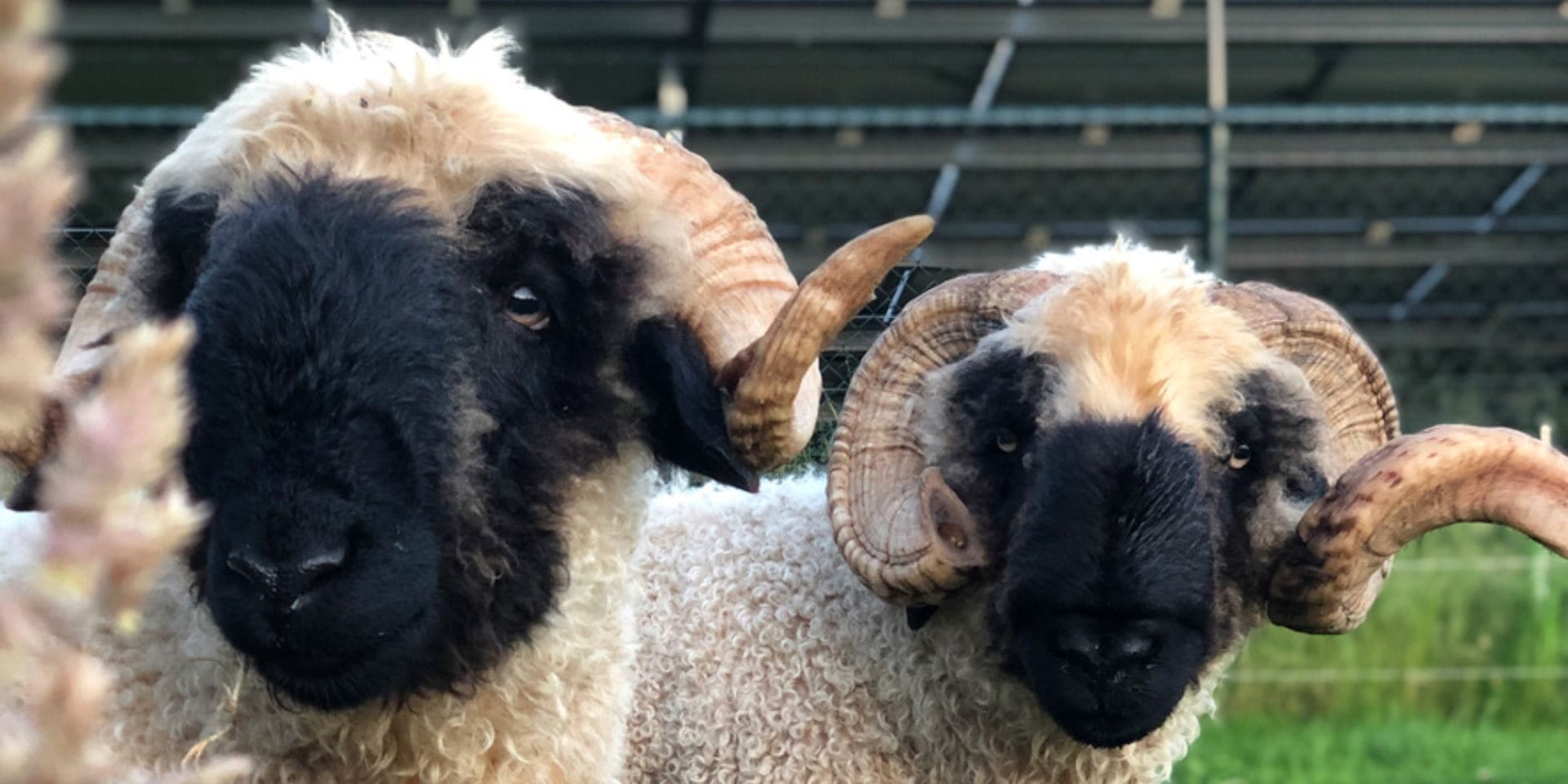
Our herd consists of 75 pedigree Huacaya alpacas in various colours, which makes for lots of variety in the field. We also have 30 Walliser Schwarznase sheep, a beautiful long-haired breed of sheep from Switzerland
We are continuously professionalising the feeding, care and environment of our animals to optimise their welfare and health. Every year between April and September we welcome 20 to 30 crias, all born from superior animals with proven bloodlines. As a result, our herd has continued to expand and improve in recent years in terms of wool quality, colour, build and character of the animals.
Huacaya alpacas
Huacaya (pronounced wacaja) alpacas belong to the camelids and, unlike the long-haired suris, have a short dense coat. In Europe, about 90% of all alpacas are huacaya.
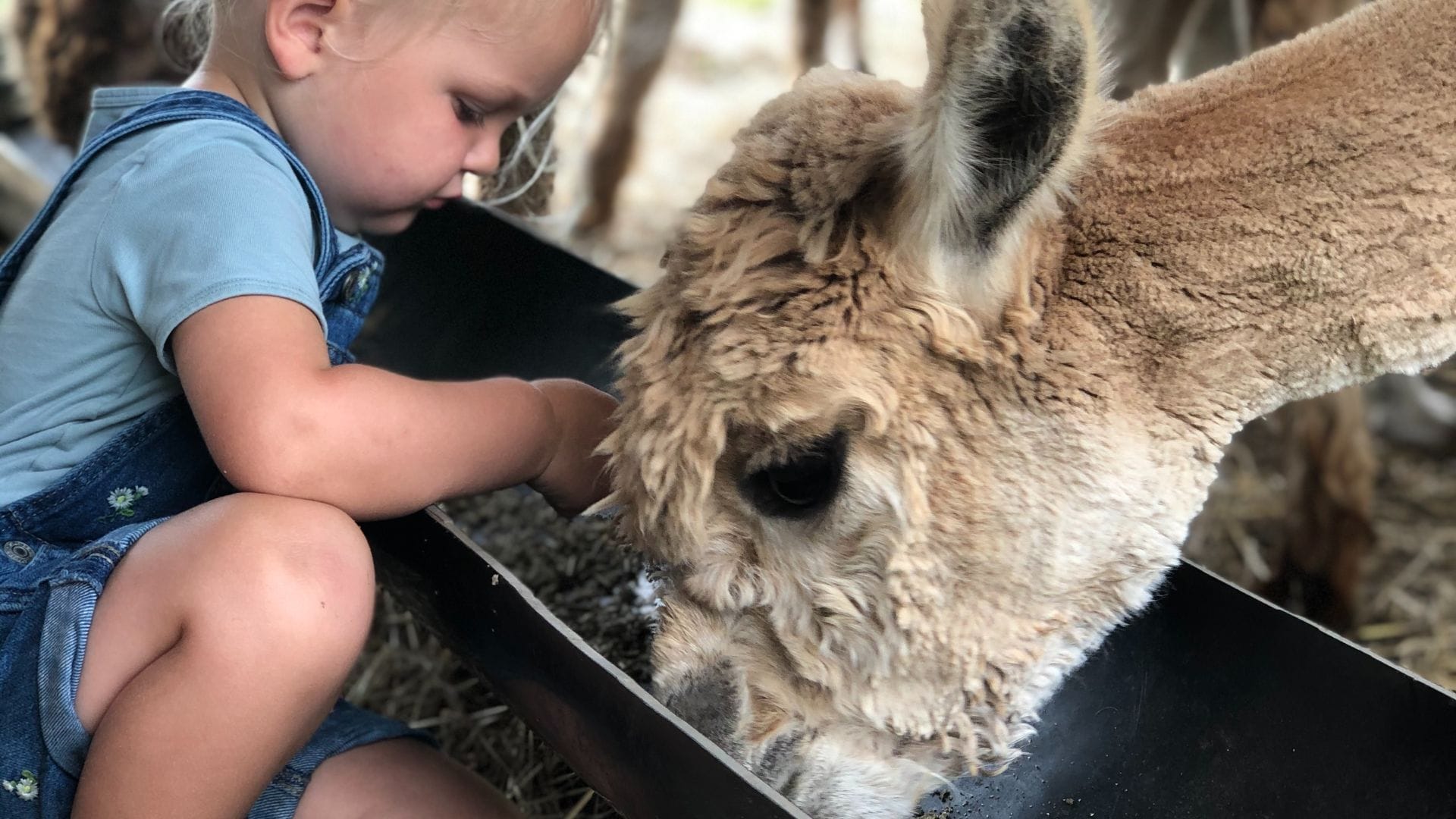
Huacayas are native to the Andes, which makes them resistant to all kinds of weather. Mares can basically give birth independently. Huacaya alpacas prefer to live in small herds of about 20 animals. Alpacas kept alone can literally die of loneliness.
Each animal needs about 500 square metres of land. In general, they are curious and gentle animals. They look incredibly cuddly, but by nature these animals do not like that. They are not likely to spit at people, but they sometimes spit among themselves to determine the order of rank in the herd.
The care of huacaya alpacas is not very intensive. In summer, the animals can get by with sufficient grass, water and shelter or shade in extreme heat. In winter, this can be supplemented with hay, alpaca pellets and soaked beet pulp. Alpacas should be sheared once a year before summer. Alpaca wool is similar to cashmere and much softer than most sheep's wool and therefore increasingly popular for clothing, among other things.


Walliser Schwarznase
We think they're the most beautiful sheep in the world! The Walliser Schwarznase is a long-haired mountain sheep from the Valais region of Switzerland. These very distinctive mountain sheep with a black muzzle, ears, knees and feet are gentle and sociable, and are very self-sufficient.
Rams can be identified by their large curly horns and flat nose. Ewes have smaller horns turned outwards. Their lambs are sometimes called "the cutest animals in the world". It is a joy to welcome a few every spring. Their beautiful long fleeces can be very successfully felted into rugs or wall hangings.